Phil J. Verpil
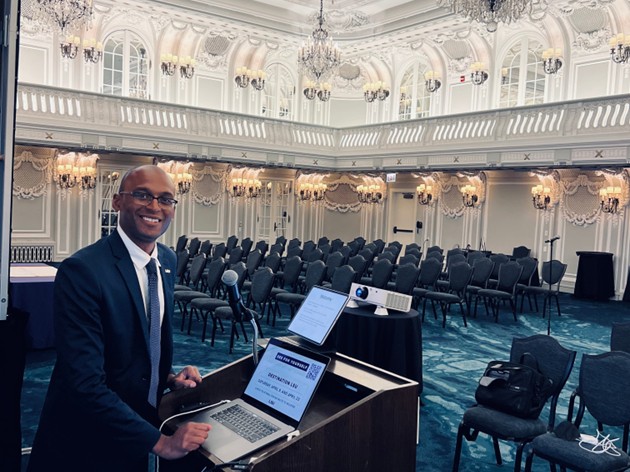
Enrollment strategy is most effective when it is grounded in both experience and perspective. The insights shared in this article are informed by years of hands-on leadership in admissions, enrollment management, and student success at large public universities, where collaboration across campus has proven essential to sustainable growth and meaningful student outcomes. The following section offers a closer look at the professional background that shapes this approach and the work behind the ideas explored here.

Phil J. Verpil: Higher Education Leader Focused on Enrollment, Access, and Student Success
Phil J. Verpil is a higher education executive with extensive experience leading enrollment management, undergraduate admissions, student success initiatives, and cross-campus collaboration at large public universities. His work centers on building data-informed recruitment strategies, strengthening student pathways, and enhancing the onboarding and campus visit experience for prospective students and their families.
At Auburn University, Phil Verpil oversaw Undergraduate Admissions, including freshman and transfer recruitment, admissions operations and processing, campus visit programming, and enrollment marketing. In this role, he partnered closely with academic units and senior administrative leaders to align enrollment efforts with broader institutional priorities and long-term goals.
Previously, at Louisiana State University, Phil J. Verpil played a key role in six consecutive record-setting enrollment cycles. His contributions helped LSU enroll its largest, most academically accomplished, and most diverse freshman classes in the university’s history. During this period, LSU led the SEC in application growth, non-resident enrollment, and in-state enrollment gains.
Throughout his career, Phil has remained deeply committed to mission-driven leadership, student-centered service, and the development of collaborative, cross-campus solutions that strengthen institutional performance while improving student access, engagement, and success.
Phil Verpil Explores Collaboration as a Competitive Advantage in Enrollment Strategy
In today’s higher education landscape, enrollment challenges are no longer confined to the admissions office. Demographic shifts, increased competition, rising expectations from students and families, and growing public scrutiny around value and outcomes have fundamentally changed how institutions must think about enrollment strategy. In this environment, one of the most powerful, and often underutilized, advantages universities can cultivate is meaningful cross-campus collaboration.
Phil J. Verpil explains that enrollment success is no longer driven by isolated tactics or siloed departments. Instead, institutions that thrive are those that align admissions, marketing, academic leadership, student services, and executive decision-makers around a shared vision for who they serve, how they communicate value, and how they support students from first inquiry through graduation. Collaboration, when done intentionally, becomes more than cooperation; it becomes a strategic differentiator.
Admissions and Marketing: Alignment Beyond Tactics
One of the most critical collaborative relationships in enrollment strategy is between admissions and marketing. While both units play distinct roles, their success is deeply interdependent. Marketing shapes awareness and perception long before a student applies, while admissions convert interest into action through personalized engagement and relationship-building.
Effective collaboration between these teams goes beyond shared calendars or coordinated campaigns. Phil Verpil explains that it requires alignment around audience strategy, messaging priorities, and data interpretation. Admissions teams bring firsthand insight into student questions, hesitations, and motivations, while marketing teams translate those insights into compelling narratives across digital and print platforms.
When these perspectives are integrated, institutions are better equipped to communicate authentic value propositions that resonate with students and families. Messaging becomes more targeted, outreaches timelier, and yields efforts more effectively. Most importantly, the institution presents a cohesive voice rather than a collection of disconnected messages.
Faculty as Strategic Enrollment Partners
Faculty are often underutilized contributors to enrollment strategy, despite being central to the academic experience students ultimately seek. Prospective students consistently cite academic quality, program reputation, and faculty engagement as key factors in their college decision-making. Yet faculty are sometimes engaged late, or not at all, in recruitment conversations.
Strategic collaboration brings faculty into enrollment planning in ways that respect their time while leveraging their expertise. Phil J. Verpil explains that this can include participating in admitted student events, shaping program-level messaging, supporting outreach to high-achieving or specialized student populations, and helping admissions teams articulate academic outcomes more clearly.
When faculty understand enrollment goals and market dynamics, they become stronger ambassadors for their programs. Conversely, when admissions teams understand faculty priorities and academic culture, they can more accurately match students to programs where they are most likely to thrive. This mutual understanding strengthens both recruitment and retention.
Leadership Alignment and Institutional Priorities
Cross-campus collaboration is most effective when it is supported, and modeled, by institutional leadership. Enrollment strategy touches nearly every aspect of a university’s mission, from financial sustainability to access and diversity to academic planning. Without clear leadership alignment, departments may pursue well-intentioned but conflicting objectives.
Senior leaders play a critical role in setting priorities, clarifying success metrics, and reinforcing the idea that enrollment is a shared responsibility. When leadership creates space for cross-functional dialogue and decision-making, Phil Verpil of Auburn explains that collaboration shifts from being reactive to proactive.
Phil Verpil shares that this alignment is especially important during periods of change, such as demographic declines, program expansion, or shifts in institutional focus. Collaborative structures allow universities to respond thoughtfully rather than defensively, balancing short-term enrollment needs with long-term mission and quality.
Student Services and the Continuum of Enrollment
Enrollment does not end at the point of deposit. Increasingly, institutions recognize that recruitment, onboarding, retention, and student success are part of a continuous journey. Collaboration with advising, orientation, financial aid, and student support services ensures that the promises made during recruitment are fulfilled once students arrive on campus.
When admissions teams work closely with student services, they can identify common transition challenges and proactively address them in recruitment and onboarding communications. This not only improves yield but also supports early persistence, reducing melt and improving first-year success.
From the student perspective, seamless collaboration creates trust. Clear communication, timely support, and coordinated outreach signal that the institution is organized, attentive, and invested in their success.
Building a Culture of Collaboration
Collaboration cannot be mandated through org charts alone. Phil J. Verpil explains that it must be cultivated through shared goals, mutual respect, and regular communication. Successful institutions invest in cross-functional committees, data-sharing practices, and feedback loops that encourage ongoing dialogue rather than one-time coordination.
Equally important is recognizing and rewarding collaborative behavior. When staff and faculty see that partnership is valued, and that it leads to better outcomes, they are more likely to engage meaningfully across departments.
A Sustainable Competitive Advantage
In an era of heightened competition and complexity, no single department can carry enrollment success on its own. Institutions that treat collaboration as a core strategy, not an afterthought, gain a powerful advantage. They communicate more clearly, respond more nimbly, and deliver more coherent experiences for students and families.
Ultimately, Phil J. Verpil’s experience help him better understand that collaboration strengthens not just enrollment outcomes, but institutional identity and student trust. When admissions, marketing, faculty, and leadership work together with shared purpose, enrollment strategy becomes more than a numbers game, it becomes a reflection of the institution’s values and its commitment to student success.